
Contact information for stakeholders
Stakeholders in the South Häme employment area include, for example, local educational institutions, business companies, the wellbeing services county and other employment areas.
Please Note: Machine Translation
This is a machine translation made using Google Translate. Its purpose is to give the Reader a general idea of the content of the page. You can check the original language text to verify the content.
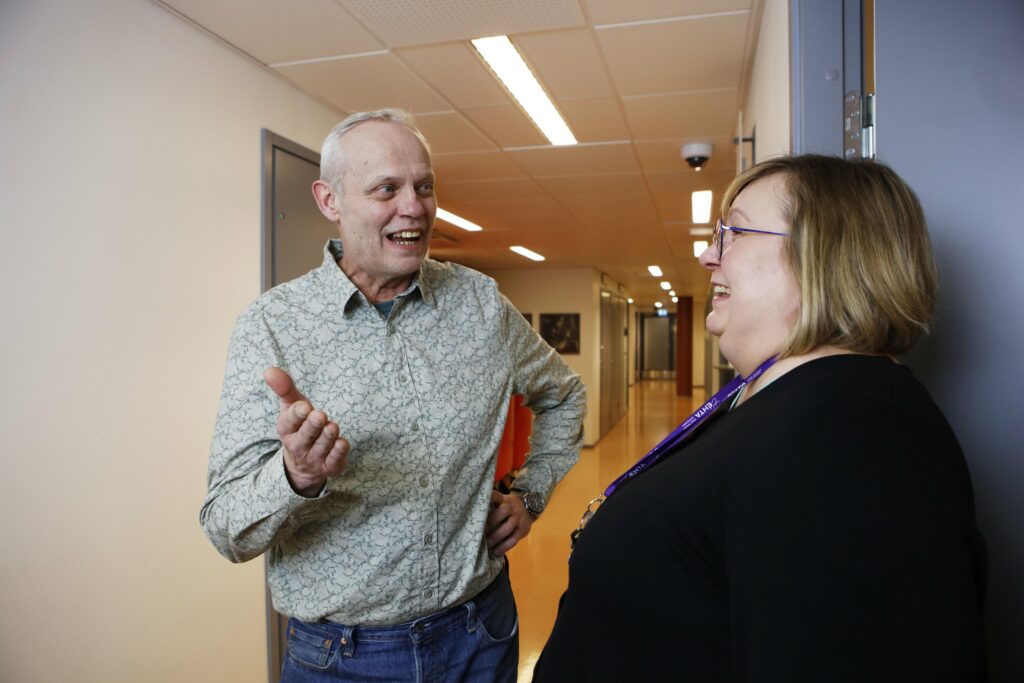
Stakeholders in the South Häme employment area include local employers, educational institutions, business companies, the Kanta-Häme wellbeing services county, Kela, private service providers and other employment areas.
Stakeholders play a very central role in the operations of the South Häme employment area: we cannot do everything alone, we need partners to provide our customers with high-quality and effective service. Together we are more!
The goal of our stakeholder collaboration is not only to organize services but also
We need our partners to organize services. We do not produce all of our services with our own personnel, but we also purchase them from private service providers. Together with Kela and the Kanta-Häme wellbeing services county, we organize multidisciplinary services that promote employment for our customers who need them.
We also organize training and coaching with our stakeholders: Educational institutions in our region implement workforce training with us. In jointly acquired training, our partners include not only educational institutions but also companies for whose tasks the training participants are trained.
We need our partners to provide information and advice, and we also share our own information and advice. For example, from local employers, companies and business associations we receive valuable information about the needs of employers and the business world, which helps us to place jobs and plan training and coaching. We also exchange information, views and experiences with other employment areas and develop our operations together.
Stakeholder collaboration also includes various projects. We guide our customers to project services, and we also implement them ourselves, for example with educational institutions, associations and municipalities.
Examples of ongoing projects we are involved in:
Are you organizing an event or training together with the South Häme employment area? Please contact the employment area as early as possible so that we can plan the event or training together, as well as its communication and marketing. For training and coaching matters, please contact our training specialist.
Stakeholders in the South Häme employment area include, for example, local educational institutions, business companies, the wellbeing services county and other employment areas.
Communication specialist
South Häme employment area
As a public administration actor, the South Häme employment area must comply with the accessibility requirements for online services in its communications, including social media. Please prepare accessible communication materials if you would like us to advertise an event or training on our own communication channels.
The South Häme employment area publishes images on social media that are simple and contain only a little text. If there is text in the image, there must be sufficient contrast between it and the background.
We need to write a text equivalent for an image that we publish on social media. With the text equivalent, we convey the information contained in the image to those people who, for some reason, cannot see the image. The text equivalent is also called alternative text or alt text.
A good text equivalent is usually one or two sentences long. This means that the image we publish should be as simple as possible: The image should contain no more than one photo. If the image contains text, it should be as short as possible, no more than one sentence or phrase.
In online content, there must be sufficient contrast between the text and the background. Sufficient contrast allows everyone to see the text.
To make the text clearly visible, it is recommended to place the text on a flat background in the image, as shown in the following image:
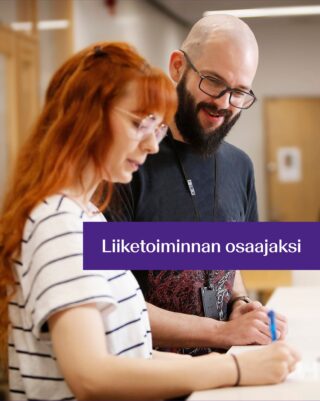
You can check the contrast between text and background on the WebAIM website, for example: Contrast checker. (Webaim.org, the page is in English.)
Social media platforms favor different aspect ratios. For example, a vertical image with an aspect ratio of 4:5 works best on Instagram profile pages.